Video: the WZMOCNIA unit in turn in a park among trees, in a city park with a fountain and the Palace of Culture behind, on a square between office buildings and in a hotel garden — each time first with the walls shown as transparent and two people in armchairs, then closed
EmployerWe create conditions in which employees can step out of reactive mode and return with greater clarity of decision.See the pilot →SpecialistsControlled conditions of restricted stimulation for psychotherapists, psychologists and facilities — access after verification of professional credentials.See the terms of cooperation →Site hostsGive your guests an experience your competitors don’t have — and an asset that can also work beyond the hotel.See the partnership model →

Retreat in the Rooms

A separate room with a strongly reduced number of stimuli. 1, 2 or 3 hours, alone, at your own pace — at the hotel hosting the unit, or at your company's premises.

What a stay looks like

  1. 1BookingA slot is booked at hotel reception, and during a pilot — in the employee calendar, with one click.
  2. 2Entry with a codeThe unit has two separate rooms. Each person is alone in theirs — no one comes in during the stay.
  3. 3The stayA quietened interior, dimmable light, a seat. Narrator guidance to choose, or simply the stay. Afterwards the room is prepared for the next person.

Research · Chamber-REST · 2025

Three hours without stimuli. Researchers measured it.

One stay in a dark, sound-attenuated room — and a measurement a week later, compared with a group that spent the same three hours in an ordinary room with a phone. We say plainly what this means for WZMOCNIA — including what the studies did not show.

  • 2 studies · 2025
  • n = 180 and 116
  • 1 stay · 3 h
  • control group
See the conclusions for WZMOCNIA
Information overload1–10 · lower = less
beforeafter6.976.566.96.0
  • Chamber-REST
  • Control group

● group difference significant · p < 0.001

Own chart based on Table 1: Bartolen and Soláriková (2025), BMC Psychology 13, 796.

Perceived stressPSS 0–40 · lower = less
beforeafter19.519.419.417.2
  • Chamber-REST
  • Control group

● group difference significant · p = 0.030

Own chart based on Table 1: Bartolen and Soláriková (2025), BMC Psychology 13, 796.

After the stay: this is where the groups differed
  • Curiosity towards experience · scale 0–24 · p < 0.001

    15.7
    8.3
  • Distance from experience (decentering) · scale 0–28 · p < 0.001

    14.2
    9.7
  • Satisfaction with the stay · scale 1–10 · no difference

    7.9
    7.9
  • Chamber-REST
  • Control group

State mindfulness (Toronto Mindfulness Scale) measured after three hours; satisfaction with the stay (1–10) for comparison. 58 people per group.

Own chart based on Table 1: Soláriková and Bartolen (2025), Acta Psychologica 253, 104697.

MindfulnessMAAS 15–90 · higher = more
beforeafter54.153.256.453.5
  • Chamber-REST
  • Control group

○ group difference not significant · p = 0.068

Own chart based on Table 1: Bartolen and Soláriková (2025), BMC Psychology 13, 796.

Sleep quality1–10 · higher = better
beforeafter6.86.87.16.9
  • Chamber-REST
  • Control group

○ group difference not significant · p = 0.301

Own chart based on Table 1: Bartolen and Soláriková (2025), BMC Psychology 13, 796.

RuminationRRQ 12–60 · lower = less
beforeafter43.543.141.341.1
  • Chamber-REST
  • Control group

○ group difference not significant · p = 0.842

Own chart based on Table 1: Bartolen and Soláriková (2025), BMC Psychology 13, 796.

State anxietySTAI · lower = less
beforeafter44.844.538.337.1
  • Chamber-REST
  • Control group

○ no group difference after the stay · p = 0.309

Own chart based on Tables 1 and 2: Soláriková and Bartolen (2025), Acta Psychologica 253, 104697.

HRVlog RMSSD · higher = more
beforeafter1.5151.5011.7111.66
  • Chamber-REST
  • Control group

○ no group difference after the stay · p = 0.207

Own chart based on Tables 1 and 2: Soláriková and Bartolen (2025), Acta Psychologica 253, 104697.

Bartolen and Soláriková, BMC Psychology 13, 796 (2025); Soláriková and Bartolen, Acta Psychologica 253, 104697 (2025). Own charts from data in the articles' tables. The Chamber-REST laboratory was studied, not the WZMOCNIA Room.

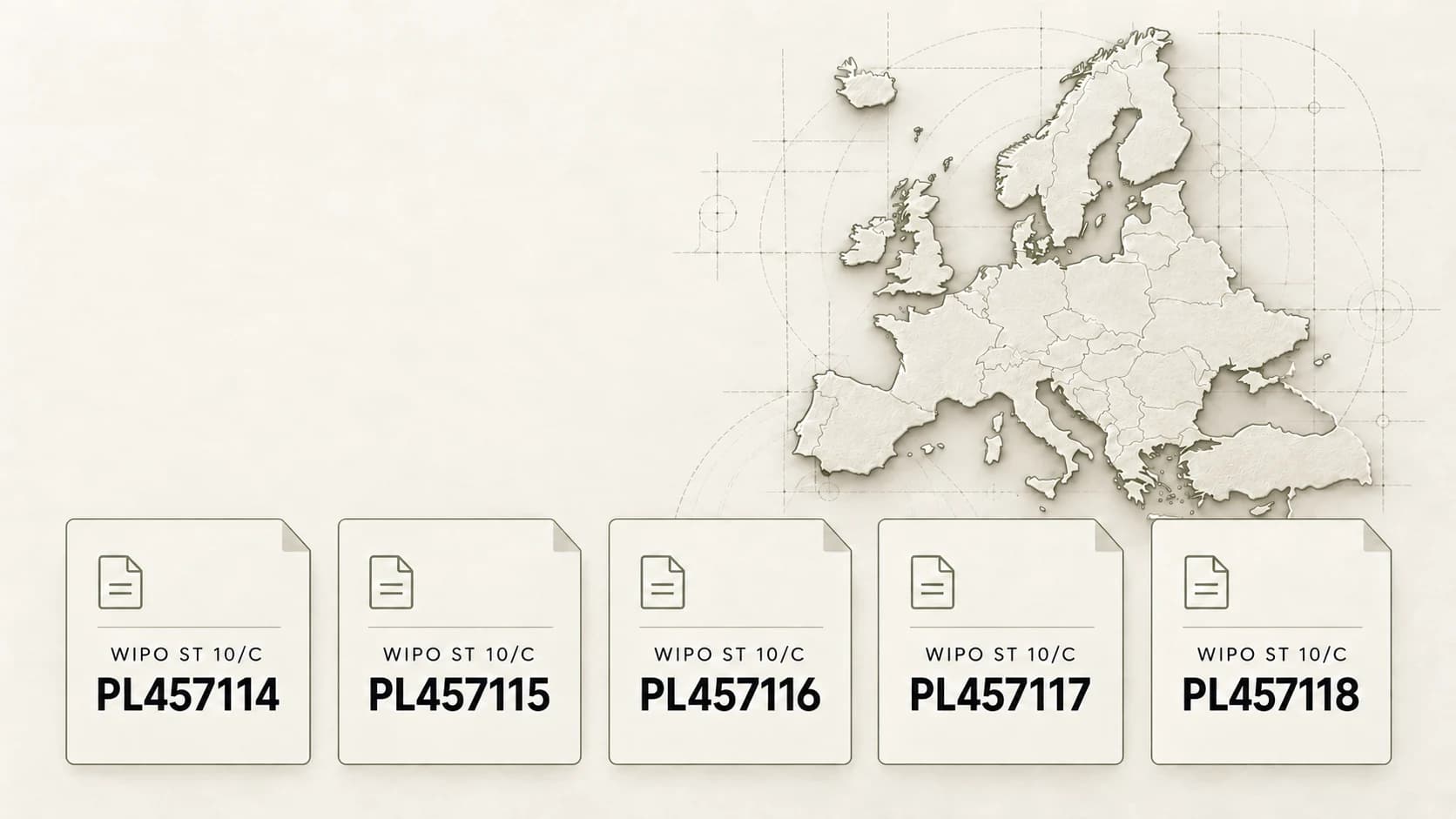
Five application cards in front of a map of Europe — WIPO ST 10/C PL457114, WIPO ST 10/C PL457115, WIPO ST 10/C PL457116, WIPO ST 10/C PL457117, WIPO ST 10/C PL457118

5 patent FILINGS for inventions

Polish inventions

The WZMOCNIA Room and its control are solutions developed in Poland by NIHILI P.S.A. Five of them have been filed for patent protection with the Patent Office of the Republic of Poland.

WZMOCNIA patents and know-how →

WZMOCNIA