What is WZMOCNIA?
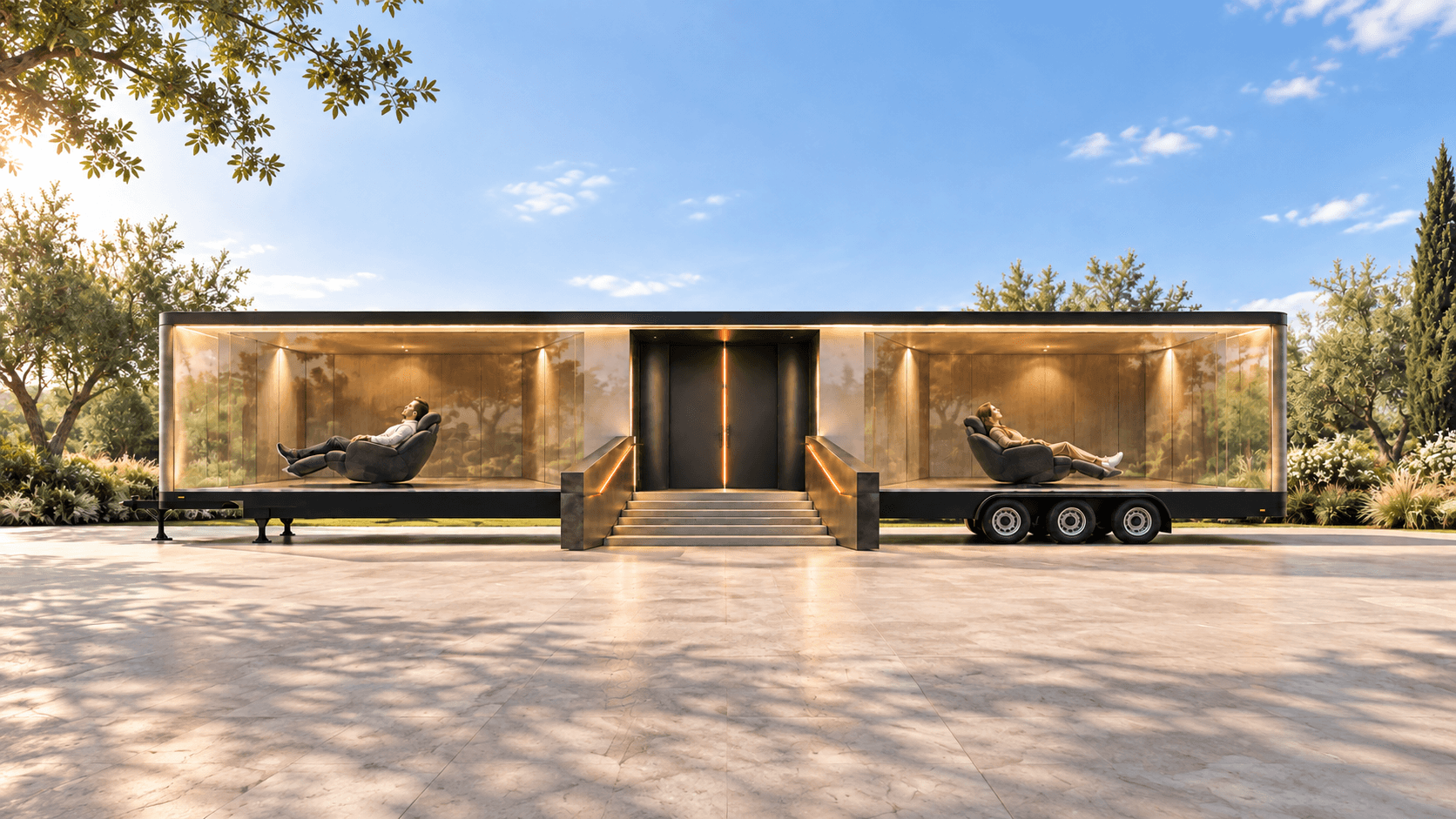
A mobile unit with two rooms of silence and darkness.
Conditions of restricted stimulation — for a specialist’s work with a client.
What it is
In short
The cooperation in four sentences
- WZMOCNIA provides the conditions.Silence, darkness and an armchair. The same in every session.
- The specialist leads online.By audio, using their own method. They do not enter the room.
- The client pays separately.The specialist for the session, NIHILI for the stay.
- NIHILI does the rest.The slot, the code, preparing the room, staff, servicing.
Where does it stand?
Next to a hotel or on the facility’s grounds.
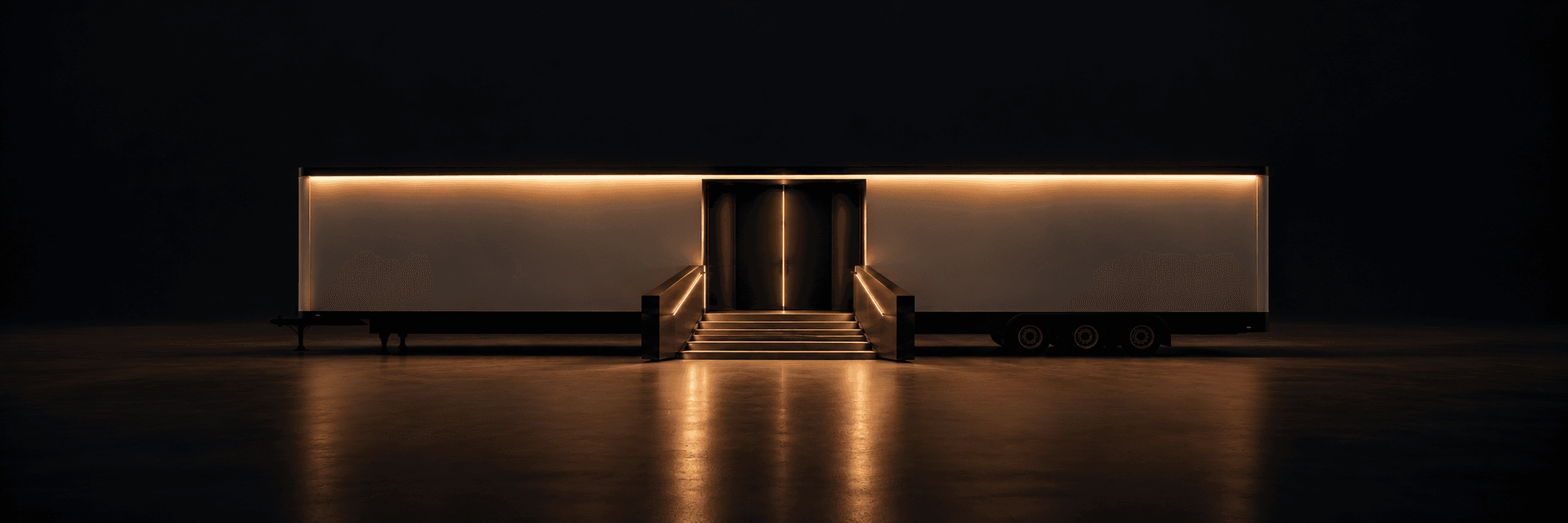
- No foundationsarrives ready, leaves without dismantling
- Two roomstwo people at the same time, each on their own
- approx. 14 × 3 mthe space needed on the facility’s grounds
What does the client do?
- Gets a slot and a codebuys the stay from NIHILI
- Goes in alonewith the code; the phone stays outside the door
- Stays in silence and darknessin an armchair; hears the specialist through the speakers
They can stop and leave at any moment.
What is inside?
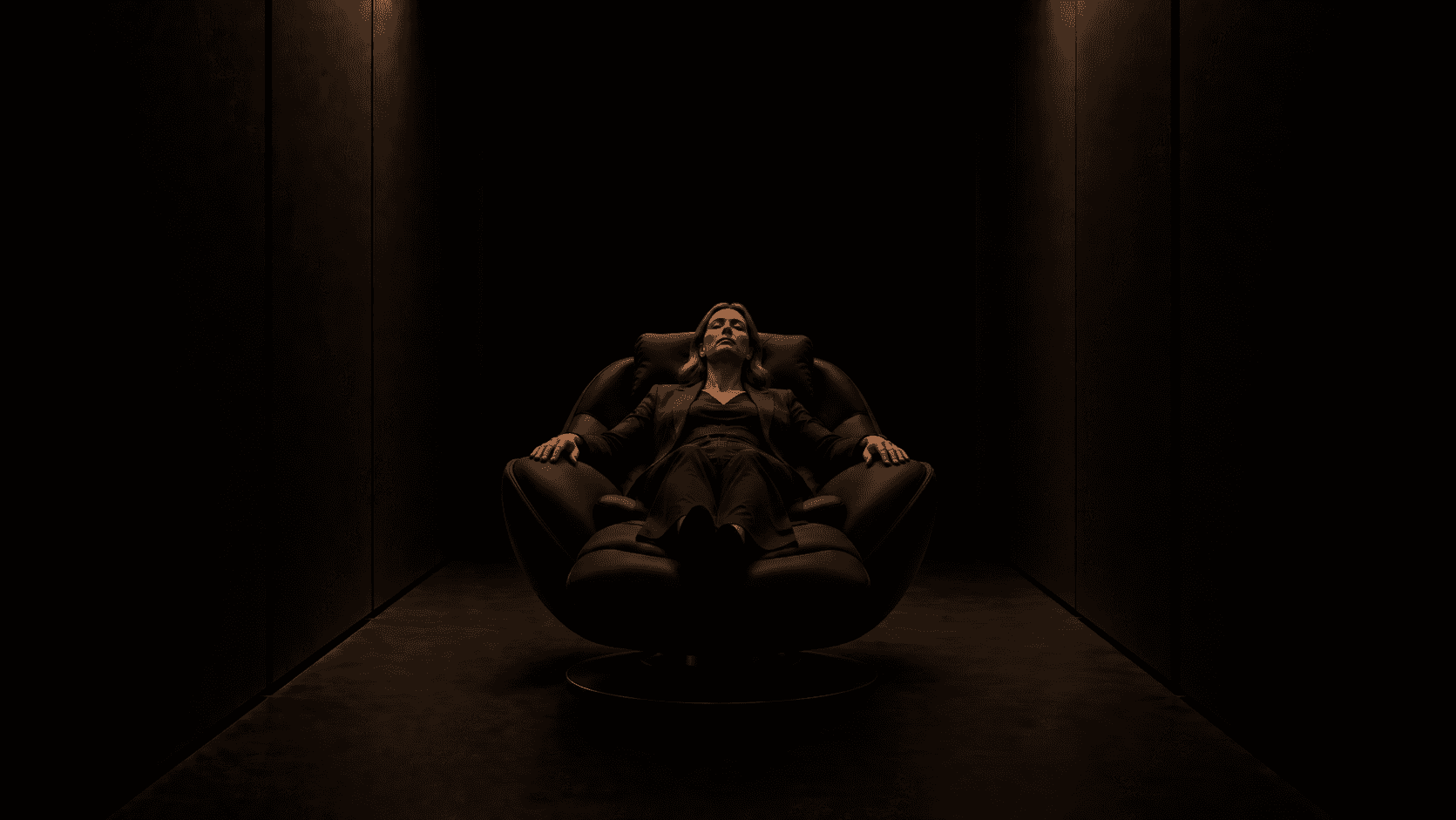
- Silencea quietened interior
- Armchairzero-gravity position
- Darknessthe client sets it themselves
- MetaRoptional: spatial acoustics, a narrator and an online specialist
No cameras and no recordings.
Where is the specialist?
At their own place. They connect by audio.
- Voice onlyThe client hears the specialist through the room’s speakers.
- With a signalThe start of the transmission is signalled to the client.
- No recordingThe connection is not recorded.
The specialist does not enter the room.
How do we know it makes sense?
Silence and darkness have their own science.
Research · Chamber-REST · 2025
Three hours without stimuli. Researchers measured it.
One stay in a dark, sound-attenuated room — and a measurement a week later, compared with a group that spent the same three hours in an ordinary room with a phone. We say plainly what this means for WZMOCNIA — including what the studies did not show.
- 2 studies · 2025
- n = 180 and 116
- 1 stay · 3 h
- control group
Bartolen and Soláriková, BMC Psychology 13, 796 (2025); Soláriková and Bartolen, Acta Psychologica 253, 104697 (2025). Own charts from data in the articles' tables. The Chamber-REST laboratory was studied, not the WZMOCNIA Room.
Potential changes
What might change over time?
The strongest potential changes after a series of sessions
One session may bring a moment of relief. A series creates space for regular rest and practice between sessions.
Well-being, self-awareness and everyday habits.
- How we know:
- Studied after one stay
- What it depends on:
- The stay itself
- After one session
- Relief from excess stimulation and more mental space.
- After a seriesweeks–months
- Feeling less overwhelmed in everyday life.
Rest and calm
Less information overload
- How we know:
- Studied after one stay
- What it depends on:
- The stay itself
- After one session
- Relief from excess stimulation and more mental space.
- After a seriesweeks–months
- Feeling less overwhelmed in everyday life.
Possible effects depend on the person and the type of session. These are potential directions of change, not guaranteed outcomes.
See the complete overview →For the specialist
What does the specialist gain?
- A practice room without building onea room with controlled conditions, with no upkeep of your own
- Work done their own waythe specialist sets the aim, the method and the course of the session
- Accreditationonly verified specialists and facilities work in the unit
Every specialist works in their own way. The conditions are the same.
How to use the WZMOCNIA Room?
Three ways of working. The same conditions.
REST
Only specialists with professional credentials — including psychologists and psychotherapists — after accreditation.
a published REST protocol
INWARDMethod in development
Development trainers and specialists — after NIHILI training.
the NIHILI protocol
The specialist leads every session online, by audio. Staff are available over the intercom during every session, and the client can stop at any moment. NIHILI does not provide medical services.
Who can lead REST?
Specialists with professional credentials. After accreditation.
- chair-RESTa session in an armchair with reduced light and sound
- Chamber-RESTrestricted stimulation in a room
- Protocolpublished: time, instructions, contact with the session leader and the way the session ends
A stay in a quiet room alone is not yet REST.
Professional credentials are held by, among others, psychologists and psychotherapists. The list of protocols for use in the unit is in preparation. NIHILI does not provide medical services.
Explore REST →What is INWARD (in Polish: Wsłuchanie)?
A method NIHILI is developing.
- A way of workingguiding attention towards one’s own experience: sensations, emotions and thoughts — also before they settle into words
- The NIHILI protocolin conditions of restricted stimulation, following a set course of the session
- Session leadersdevelopment trainers and specialists — after NIHILI training
The method is in development. We do not yet offer INWARD sessions or training.
Explore INWARD →And if I work with my own method?
That is a specialist session.
- Your own approachchosen by the specialist, within their competence
- The same conditionsthe client in the WZMOCNIA Room, the specialist online, by audio
- For whompsychotherapists, psychologists, psychiatrists, coaches, development trainers and facilities — after accreditation
WZMOCNIA provides the conditions and does not define the method.
NIHILI does not provide medical services and does not assess the effectiveness of the specialist’s method.
Explore specialist sessions →Does NIHILI step into the specialist’s work?
No. The method, the relationship with the client and the responsibility belong to the specialist.
NIHILI does not define the way of working, does not assess the method and does not promise a result of the session.
Cooperation
How does the cooperation work?
The specialist leads the session. NIHILI provides the room and organises the client’s stay.
Specialist
the method and the session
leads online
the client in the WZMOCNIA Room
organises the stay
NIHILI
the conditions and the stay
Who does what?
Specialist
- Qualifies the clientin their own process, under their own responsibility
- Sets the aim and the methodfor REST — a published protocol
- Leads the sessiononline, by audio
- Keeps the recordsat their own practice
NIHILI
- Provides the slot and the codesells the stay to the client
- Prepares the roombefore and after the session
- Is on the intercomstaff available during every session
- Services the unitand verifies specialists’ credentials
The specialist uses the room like a practice room rented in an office building.
What does a session look like?
Four stages.
- BeforeThe specialist qualifies the client and agrees the aim with them. The client gets a slot and a code.
- EntryThe client enters with the code and sets the light. The specialist connects at the agreed time.
- DuringThe specialist leads by audio. Staff are on the intercom and take no part in the session.
- AfterA debrief online or outside the unit. The records stay with the specialist.
The client can stop and leave at any moment.
Who pays, and for what?
The client pays the specialist for the session, and NIHILI for the stay.
- The sessionthe specialist sets the fee and settles it with the client themselves
- The stayNIHILI sells it to the client and settles it
The price of the stay, availability and cancellation rules are agreed before booking.
Where does client data stay?
With the specialist. NIHILI does not collect health data.
Surveys and notes are saved only in the session leader’s browser, encrypted with their password.
What does the specialist get to work with?
The session leader’s tools.
- Session panelsurveys before the session, after it and the next day; history and notes
- Protocol configuratordraft session plans: REST, INWARD and your own
- Online trainingthe unit, the course of a stay, the audio connection, the safety rules
- Slotsa weekly grid of the session leader’s free slots
The panel organises observations. It does not assess the effectiveness of a session.
Draft editors for REST, INWARD and custom sessions are available. The INWARD protocol, training and approval for delivery remain in development.
See the tools for designing sessions →Standard of the place
What is meant to set this place apart?
Fewer stimuli. A set course. Checked repeatability.
- Reduced stimuliSound and light strongly reduced. To be measured: background in silence, maximum level, light at the eyes.
- A set courseOne setting before the session: approach, hold, return. To be measured: time to criterion and fluctuation.
- Checked repeatabilityA record of conditions for every session. To be measured: deviations between sessions and units.
One standard of the place — wherever the unit stands and whoever facilitates the session.
The cards are in preparation: sensors are not connected yet, and the numbers on this page are for demonstration.
What do the conditions depend on in each of the five paths?
They can be provided anywhere. Here they are meant to be part of the standard of the place.
| Break, rest | Session in an office | Online session | WZMOCNIA · REST | WZMOCNIA · session with a specialist | |
|---|---|---|---|---|---|
| Guidance | nobody | specialist, present | specialist, remote | according to protocol; main part without narration | specialist, by voice alone |
| Reduced stimuli | depends on the place and the person | depends on the office | on the client's side — on their surroundings | shared conditions of the place: a design goal, checked by measurement against acceptance criteria | |
| A set course | depends on the person | lighting and organisation of the office | settings of the device and the client's room | one setting: approach, hold, return | |
| Checked repeatability | usually no record | possible; usually without measurement | possible; usually without measurement | a record of every session against the room card | |
The specialist sets the session plan. The place is responsible for the conditions — and shows whether it kept them.
Any room can be measured. The columns describe what the conditions depend on, not the worst case of a given path.
What conditions does the place provide according to the acceptance measurement?
Room card: acceptance criteria and the measurement result.
| Parameter | Acceptance criterion | How we measure | Measurement result | Assessment |
|---|---|---|---|---|
| Background in silence | up to 27 dB(A) | equivalent level at the head, without voice | 24 | within criterion |
| Maximum level | up to 32 dB(A) | maximum value in the hold phase, without voice | 30 | within criterion |
| Brightness at the eyes | up to 1 lx | lux meter at eye position, chair reclined | 0.3 | within criterion |
| Background fluctuation | up to ±2 dB | largest departure from the average in silence | ±1.2 | within criterion |
| Time to criterion | up to 8 min | time from entry until the background criterion is met | 6 min | within criterion |
| Return | 10–14 min | time of return to ambient conditions | 12 min | within criterion |
The numbers, criteria and methods in this card are for demonstration. We set acceptance criteria before the measurement; strongly reduced does not mean zero.
What does the specialist get?
The plan, the record and information about every deviation — in the facilitator's panel.
- Sets the plan of conditionsTime, phases and the proportions of voice and silence — in the configurator.
- Checks how it wentA record of every session against the plan and the room card.
- Gets documentationAlso when the measurement shows a deviation. What it means for the work is for the specialist to judge.
See a sample session conditions card with a deviation and the staff response
Session conditions card
session 7 · REST · stay 90 min
- Planned hold phase
- 70 min; main part without narration
- plan
- Background criterion met
- 56 min of silence · 80% of the assessed time
- record
- Outside criterion
- 14 min, background 33 dB(A); whole phase 28 — criterion up to 27
- technical deviation
- Background in silence
- 28 dB(A), fluctuation ±5.7 dB, maximum 39
- outside criterion
- Brightness at the eyes
- 0.5 lx — criterion up to 1
- within criterion
- Approach and return
- time to criterion 6 min — plan: up to 8; return 12 min
- within criterion
- Interruptions at the client's request
- 0 · 90 min without interruptions
- client events
- Voice and silence
- no voice guidance in this stay
- record
- Staff response
- ventilation check, service the next day
- described
- Check after service
- re-measurement after service: 24 dB(A) — criterion met
- checked
The card describes conditions in the room, not the client. It contains no session content, recordings or health data. What a deviation means for the work is for the specialist to judge.
The card describes conditions, not the client, and does not assess the session. NIHILI does not provide medical services; the method, the relationship with the client and responsibility belong to the specialist.
What could be studied
What could be studied during this work?
Parameters of experience. Measurement examples.
Tension, attention, sleepiness, sense of control or heart rate — what could be recorded, when and how could it be read? Explore the parameter overview and three hypothetical WZMOCNIA stories. The people, events and values are invented; the programme for measuring client experience has not started.
See parameters and example storiesFor the facility
And a facility?
The facility runs the programme. WZMOCNIA brings the room.
- The unit stands at the facility.On its grounds — for a few days or for years.
- The programme belongs to the facility.The aim, the method, the length and time of a stay — as it decides.
- The stay is voluntary.A participant can leave at any moment.
- NIHILI does the rest.Delivery, start-up, servicing, inspections.
Who is responsible for what?
Facility
- The programmethe aim, the method, the length and time of a stay
- Qualificationwho can use the room, when and for how long
- Staff on dutyduring the stay; a procedure for emergencies
- Participants’ recordsstay at the facility
NIHILI
- The unitdelivery, start-up, servicing, inspections
- A description of the conditionslight, sound, time, no cameras — for the facility’s decision
- A way to call for helpworking, from inside the room
- No health datano data about participants on NIHILI’s side
NIHILI does not provide medical services.
How can a facility have the room?
For a few days or for years.
- On trialthe unit comes for 4 or 11 days — with delivery, operation and servicing
- Multi-year rentalfor one year or two — for a year-round programme
- Purchasethe unit as your own — for a facility with its own grounds
- A build-out in a roomfor a facility without outdoor space — being designed
Terms and prices for facilities are agreed in conversation.
On what terms?
Three rules that cannot be crossed.
- VoluntarilyA stay is not an obligation, a punishment, a reward or a condition in the facility’s rules.
- At any momentA participant can stop and leave, without explaining.
- With staff on dutyConfirmed before the start. The participant knows who will answer a call.
These rules are part of the contract with the facility.
Inventions
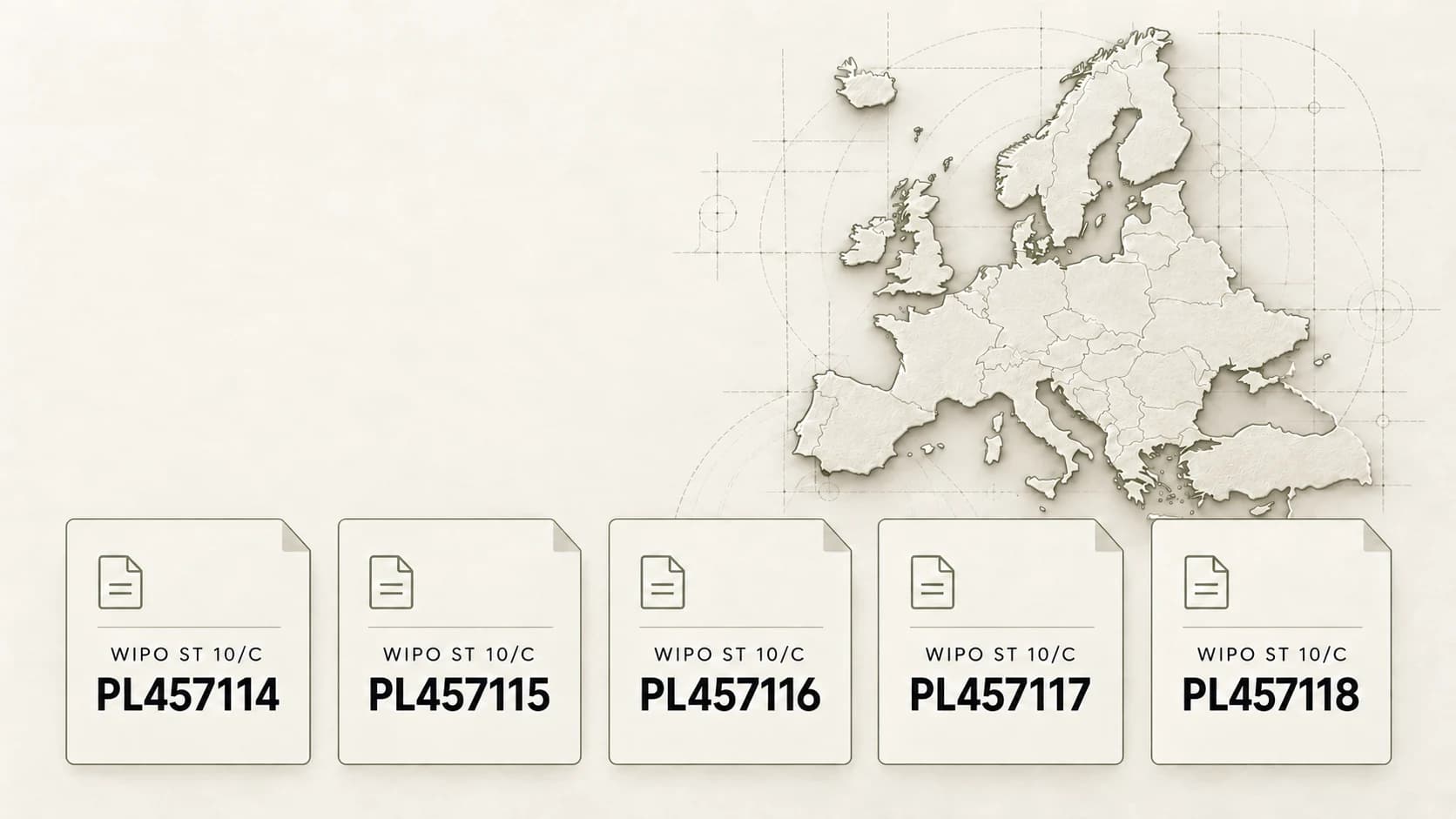
5 patent FILINGS for inventions
Polish inventions
The WZMOCNIA Room and its control are solutions developed in Poland by NIHILI P.S.A. Five of them have been filed for patent protection with the Patent Office of the Republic of Poland.
Getting started
How do we start?
With an application. No documents.
- ApplicationA form: who is applying, how they want to work and what credentials they hold. No attachments.
- VerificationWe reply by email and ask for documents confirming credentials and experience.
- Online trainingThe facility, the course of a stay, the audio connection and the safety rules.
- AccessA session leader account, the protocol configurator and slots in the calendar.
Accreditation confirms credentials. It does not assess the method.
A facility applies in the same way; we agree the scope of cooperation with the person responsible for the programme.
Application for accreditation
The WZMOCNIA Room is used only by specialists and facilities accredited by NIHILI. The application requires no documents — we ask for them in the next step.
Who is behind it?
The WZMOCNIA unit is made by NIHILI P.S.A.
NIHILI · Our job
- Prepare and service the site well
- Organise the client’s stay: the slot, the code, the staff
- Verify the credentials of specialists and facilities
What we provide
We provide conditions for growth and recovery. Participation is voluntary, and the report shows usage.
This is not therapy, a diagnosis or a health service.